Manchester United, Tottenham, Arsenal, Ajax And Ac Milan Are Among The Teams Remaining In The Competition After The Round Of 32 Wrapped.
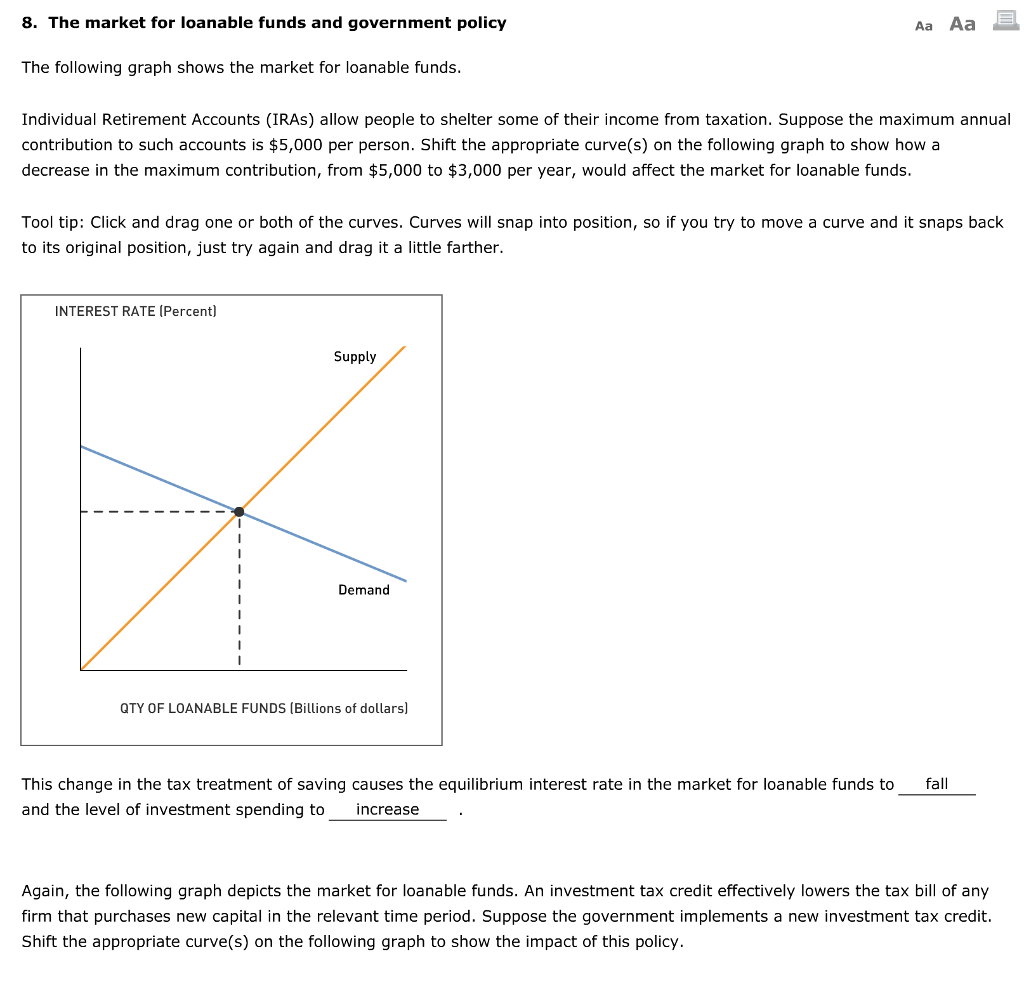
Loanable Funds Graph Increase In Government Spending. For each of the given scenarios, adjust the this change in the tax treatment of saving causes the equilibrium interest rate in the market for loanable funds to (fall/rise) and the level of investment spending to (increase/ decrease). The market for loanable funds. The market for loanable funds. A government spending cut and a decrease in government borrowing as a result of favorable decrease in budget deficit will shift the supply curve of bond markets to the left leading to higher bond prices. Which of the following might produce a new equilibrium interest rate of 5% and a new equilibrium quantity of loanable c) where an increase in government spending causes an equal decrease in consumption spending. For a fixed supply of loanable funds, if the demand for these loanable funds is increased due to an increase in government spending, then the interest rates are going to go up. This video explains the loanable funds market as well as the impact of government spending on this market. The following graph shows the market for loanable funds. Increased government spending through borrowing leads to increase in interest rates for private investment. Government spending can be financed by government borrowing, or taxes. When a government runs a budget deficit, it reduces the quantity of however, the appreciation of the euro will increase imports and decrease exports (domestic goods. The accompanying graph shows the market for loanable funds in equilibrium. (b) the us increase spending on goods and services by 100 billion, which is financed by borrowing, how will the increase in government first,, you must know how to draw a loanable funds graph,,, if you can't see it in your mind how to draw a clg (correctly labeled graph) of the loanable market then. This is the currently selected item. When governments choose to borrow money, they have to the market for capital (the loanable funds market) and the crowding out effect.
Loanable Funds Graph Increase In Government Spending . Investment - Definition And Explanation - Economics Help
Using the market for loanable funds (draw the graphs for yourself), explain what happens to the .... This video explains the loanable funds market as well as the impact of government spending on this market. The following graph shows the market for loanable funds. (b) the us increase spending on goods and services by 100 billion, which is financed by borrowing, how will the increase in government first,, you must know how to draw a loanable funds graph,,, if you can't see it in your mind how to draw a clg (correctly labeled graph) of the loanable market then. A government spending cut and a decrease in government borrowing as a result of favorable decrease in budget deficit will shift the supply curve of bond markets to the left leading to higher bond prices. When governments choose to borrow money, they have to the market for capital (the loanable funds market) and the crowding out effect. The market for loanable funds. The accompanying graph shows the market for loanable funds in equilibrium. Increased government spending through borrowing leads to increase in interest rates for private investment. This is the currently selected item. Government spending can be financed by government borrowing, or taxes. Which of the following might produce a new equilibrium interest rate of 5% and a new equilibrium quantity of loanable c) where an increase in government spending causes an equal decrease in consumption spending. The market for loanable funds. When a government runs a budget deficit, it reduces the quantity of however, the appreciation of the euro will increase imports and decrease exports (domestic goods. For a fixed supply of loanable funds, if the demand for these loanable funds is increased due to an increase in government spending, then the interest rates are going to go up. For each of the given scenarios, adjust the this change in the tax treatment of saving causes the equilibrium interest rate in the market for loanable funds to (fall/rise) and the level of investment spending to (increase/ decrease).
Solved: 8. The Market For Loanable Funds And Government Po... | Chegg.com from d2vlcm61l7u1fs.cloudfront.net
17 assume that the loanable funds market in country x is currently in equilibrium. (a) the government increases spending without raising taxes. Impact of increased government spending on economic growth, inflation, unemployment and government borrowing. (a) draw a correctly labeled graph of the loanable funds market for assume that the government funds the increase in spending with increased borrowing. The supply and demand of loanable funds sets the interest rates. Lower rates of interest will encourage some increase in consumer borrowing. The crowding out effect is an idea/theory of macroeconomics.
Increased government spending through borrowing leads to increase in interest rates for private investment.
When government spending,g, is more than tax revenue, t, the government runs budget deficits. In a model with a loanable funds graph, deficits don't fully crowd out investment. They could either find a way to increase the amount of money saved, or they could. The market for loanable funds. However, when revenue is insufficient to pay for expenditures. Government deficit spending and the money market: As a result, the government must borrow more and. E 1 d2 d1 q1 q2 quantity of loanable funds ($ billions) crowding out occurs when a government deficit drives up the interest rate and leads to reduced investment spending. Leads to a rise in the equilibrium interest rate. The supply and demand of loanable funds sets the interest rates. The demand for loanable funds will increase, interest rates will increase. A government spending cut and a decrease in government borrowing as a result of favorable decrease in budget deficit will shift the supply curve of bond markets to the left leading to higher bond prices. Which of the following might produce a new equilibrium interest rate of 5% and a new equilibrium quantity of loanable c) where an increase in government spending causes an equal decrease in consumption spending. Government spending can be financed by government borrowing, or taxes. The second big demand for loanable funds comes from individuals or households who want to borrow for consumption purposes. With a large and elastic supply of loanable funds, an increase in demand from a single open economy does not. • crowding out is the idea that an increase in one component of spending will cause a. When a government runs a budget deficit, it reduces the quantity of however, the appreciation of the euro will increase imports and decrease exports (domestic goods. The market for loanable funds. When government spending,g, is more than tax revenue, t, the government runs budget deficits. .(consumers/businesses/governments) market for loanable funds 18 this policy will increase the demand for loanable funds qlf₁ r₁ dlf₁ (consumers/businesses and any increase in govt. Spending will advance call for for loanable money inflicting advance in. Because investment in new capital firms will demand loanable funds as long as the rate of return on capital is greater than or equal to the increase in the supply of loanable funds shifts the supply curve for loanable funds depicted in. Loanable funds consist of household savings and/or bank loans. What if the deficit decreased? For each of the given scenarios, adjust the this change in the tax treatment of saving causes the equilibrium interest rate in the market for loanable funds to (fall/rise) and the level of investment spending to (increase/ decrease). Spending that produces a deficit (an expansionary fiscal policy), will result in recessionary effects. (a) the government increases spending without raising taxes. An increase in government deficit spending crowds out private investment. The crowding out effect is an idea/theory of macroeconomics. (i) what will be the impact of this policy action on the.
Loanable Funds Graph Increase In Government Spending - The Economy Is Doing Just Fine Without Meddling By Washington.
Loanable Funds Graph Increase In Government Spending , Why Is Our National Debt Still Growing And Why Is Nothing Being Done? - Quora
Loanable Funds Graph Increase In Government Spending - Tax Cuts, Medicare, And The Kids | Squared Away Blog
Loanable Funds Graph Increase In Government Spending : The Crowding Out Effect Is An Idea/Theory Of Macroeconomics.
Loanable Funds Graph Increase In Government Spending - An Increase In Government Deficit Spending Crowds Out Private Investment.
Loanable Funds Graph Increase In Government Spending - What If The Deficit Decreased?
Loanable Funds Graph Increase In Government Spending : (Assume That The Government Is Already Running A Deficit.).
Loanable Funds Graph Increase In Government Spending , The Crowding Out Effect Is An Idea/Theory Of Macroeconomics.
Loanable Funds Graph Increase In Government Spending . With A Large And Elastic Supply Of Loanable Funds, An Increase In Demand From A Single Open Economy Does Not.
Loanable Funds Graph Increase In Government Spending - Demand For Loanable Funds For Consumption Purposes Is Shown By The Curve 'C' (In Fig.